
“Maybe everyone else has found their people.”
It’s a thought I’ve heard countless women whisper in the therapy room. Sometimes it emerges when we’re talking about birthdays. Sometimes after they’ve seen photographs of friendship groups laughing over brunch. Sometimes after watching another girls’ weekend unfold on social media. And sometimes it arrives almost apologetically.
“I’ve never really had a friendship group.”
“I don’t think anyone would choose me first.”
“I feel like I’ve somehow got friendship wrong.”
The sadness in those moments isn’t simply about the absence of friends, it’s about something much deeper: the quiet belief that they’ve somehow failed.
Failed at friendship. Failed at belonging. Perhaps even failed at being a woman.
The friendship story we've been sold
Like millions of women, I loved Sex and the City. Not because it was really about shoes or cosmopolitans, but because beneath the glamour it captured something profoundly human: our longing to belong.
Carrie, Miranda, Charlotte and Samantha didn’t simply represent four friends. They represented the fantasy that no matter what life threw at you, there would always be people who knew your story. People who celebrated your successes. Witnessed your heartbreak. Answered your phone calls. Laughed until they cried with you.
Stayed.
Alongside Friends and, more recently, social media, we’ve gradually absorbed a powerful cultural message about what adult friendship should look like.
A successful woman has her people.
She has a close-knit friendship group. She has women she holidays with. Women she celebrates birthdays with. Women who know everything about her.
And if we don’t?
It can quietly feel as though we’ve somehow missed the memo. But real life rarely looks like television. The truth is that adult friendships are far more fluid than we’re often led to believe.

Life happens. People move away. Careers become demanding. Children arrive. Parents become ill. Relationships end. Some women become carers. Others experience infertility, divorce, menopause, burnout or poor mental health.
For many neurodivergent women, maintaining friendships can require enormous emotional energy. Friendships naturally ebb and flow throughout different seasons of life. Yet so many women interpret these changes as evidence that they are somehow not enough. As though everyone else has managed to hold onto lifelong friendships while they’ve somehow got it wrong.
We’re comparing our private lives with everyone else’s highlights and social media has only amplified this feeling. We see beautifully curated snapshots of girls’ holidays, birthday dinners, matching pyjamas and friendship bracelets.
But what we don’t see are the cancelled plans and unanswered messages. The misunderstandings and the friendships that quietly faded without anyone really knowing why.
The loneliness.
The grief.
The courage it takes to try and make new friends in your forties, fifties or beyond.
As psychologists, we know that humans naturally compare their private reality with other people’s public highlight reels.
No wonder so many women feel left behind. Perhaps we’re grieving the story more than the reality.
Reality compared with the story
One thought has stayed with me for a long time: I wonder whether many women aren’t actually grieving the absence of friendship but instead, whether they’re grieving the absence of the friendship story they believed they were supposed to have.
There’s an important difference.
Because what Sex and the City offered us wasn’t simply friendship, it offered belonging.
The reassurance that someone would always understand. That someone would choose you. That you would never have to navigate life alone.
Of course that resonates. It speaks to one of our deepest human longings.

The longing itself isn’t the problem.
The suffering often begins when we believe there’s only one acceptable way for that longing to be fulfilled.
Something has quietly shifted over the past few decades. Many of us now expect our romantic relationship to fulfil almost every emotional need we have. We were never designed to get everything from one relationship.
We want our partner to be our lover. Our best friend. Our therapist. Our biggest cheerleader. Our adventure companion. Our emotional regulator.
Historically, many of these needs were spread across communities, neighbours, friendships and extended families.
When all of our emotional needs become concentrated into one relationship, it places enormous pressure on both people.
However, friendships offer something beautifully different. Different perspectives, conversations, ways of being known. And when we can acknowledge that we don’t need one person to be everything, we can begin to see the value in needing a tapestry of relationships that nourish different parts of who we are.
From longing to belonging
Maybe belonging looks different than we imagined because perhaps belonging isn’t one perfect friendship group. Perhaps it’s your oldest friend who lives two hours away but still answers when you really need her.
Perhaps it’s your sister. Your neighbour. The women you’ve met through work. Your walking group. Your exercise class. Your book club.
The friend you only see twice a year but pick up exactly where you left off.
Perhaps it’s one deeply authentic friendship rather than ten acquaintances.
Perhaps belonging changes shape as we do. And perhaps that’s exactly how it was always meant to be. A question worth asking.
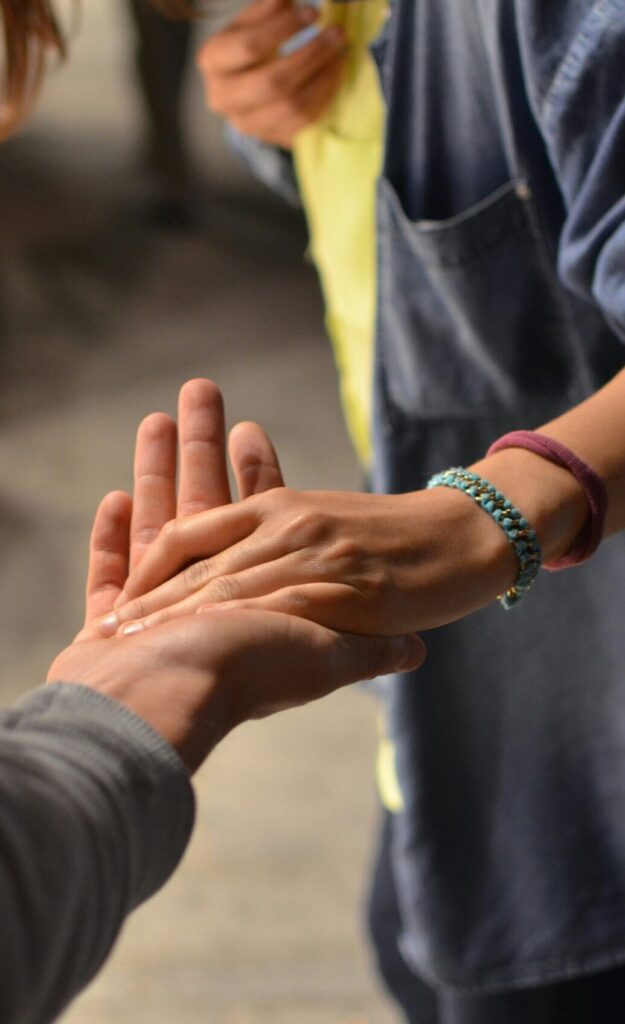
So instead of asking yourself, “Why don’t I have the friendships everyone else seems to have?” Perhaps ask yourself, “Where do I already experience genuine connection?” Who helps you feel more like yourself? Who leaves you feeling calmer rather than smaller? Who knows your story? Who can you laugh with until your stomach hurts?
Those relationships matter.
They count.
A final thought
As a psychologist, one of the most healing things I’ve learnt is that there is no universal blueprint for connection. The goal isn’t to recreate Sex and the City. The goal is to build relationships where you feel safe enough to be yourself.
Many women think they’re failing at friendship when actually they’re comparing their real lives to a cultural fantasy.
You haven’t failed.
Perhaps you’ve simply been measuring yourself against a story that was never meant to become a standard. And perhaps that’s why I still love the ending of Sex and the City. Not because Carrie ends up with Mr Big. But because she realises that the most enduring relationship she will ever have is the one she has with herself.
I think that’s something many of us spend years forgetting.
We search for people who will choose us, understand us and make us feel like we belong. And those relationships matter deeply. We are wired for connection. But there is another relationship quietly accompanying us through every chapter of our lives.
The relationship we have with ourselves.
When we begin to treat ourselves with the same compassion, loyalty and curiosity that we so readily offer others, something shifts. We stop chasing belonging quite so desperately because we are no longer abandoning ourselves in the search for it.
Ironically, I think that’s often when our relationships become richer. And it’s not because we’ve become more interesting or more lovable. But because we’re no longer asking other people to prove our worth.
So if this resonates with you, perhaps don’t leave today wondering whether you have enough friends.
Instead, ask yourself two gentle questions.
Who helps me feel most like myself? And perhaps even more importantly…How can I become a better friend to myself today?
Because maybe that was the lesson hidden in Sex and the City all along.
The greatest love story wasn’t only about finding someone else. It was about finding your way home to yourself. And from that place, every relationship becomes freer, richer and more real.
With warmth,
Claire x
Dr Claire Stubbs Featured in Cosmopolitan
Dr Claire Stubbs was recently featured in Cosmopolitan UK, sharing her psychological insights into adult female friendships, belonging, and why so many women feel they haven't "found their people."
If this article resonated with you, you may also enjoy reading Dr Claire Stubbs' interview with Cosmopolitan.
Read Dr Claire Stubbs' Cosmopolitan Feature